Lattice: a software studio or development agency
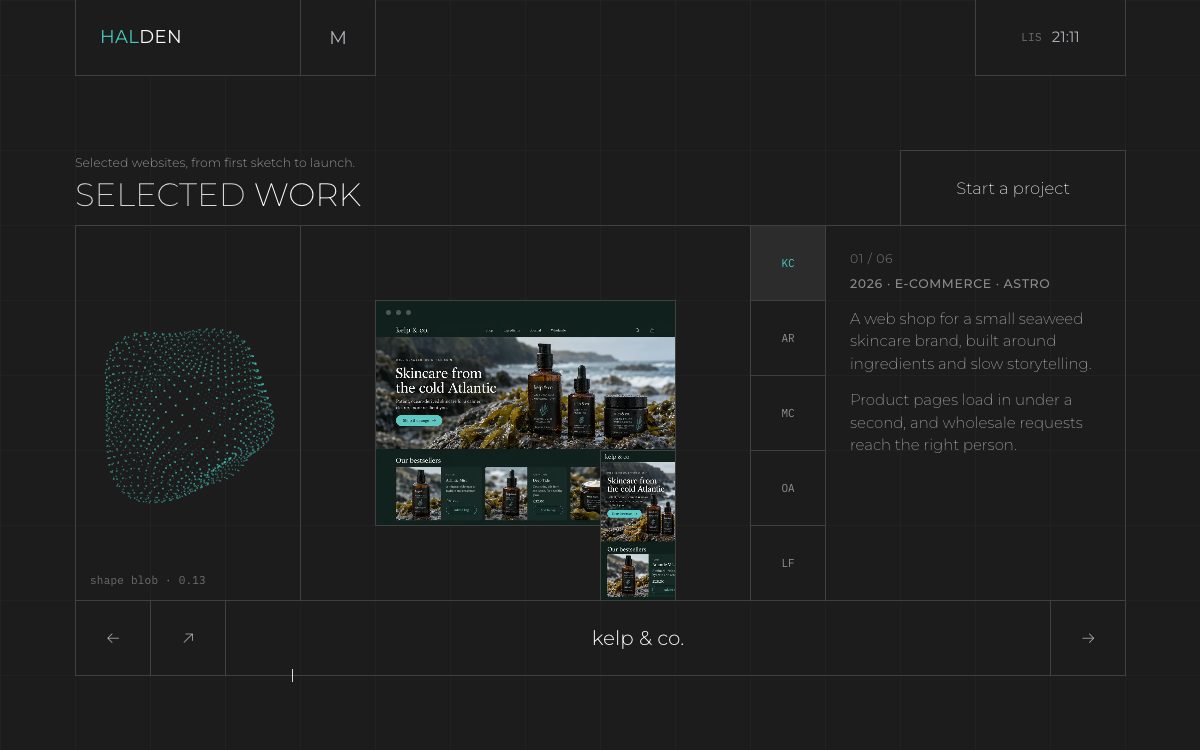
Lattice is one index.html file and a folder of screenshots, with no build step. The middle of the page is a pinned project switcher: six projects, each shown with a desktop and a phone screenshot, which is how buyers judge a studio that builds apps and websites. Every border sits on a visible grid and frames draw themselves as you scroll, so the site itself looks like careful front-end work. The contact form takes a name, an email, an optional phone number and a message. More on the Lattice page.
Orrery: IT consulting, cloud or managed services
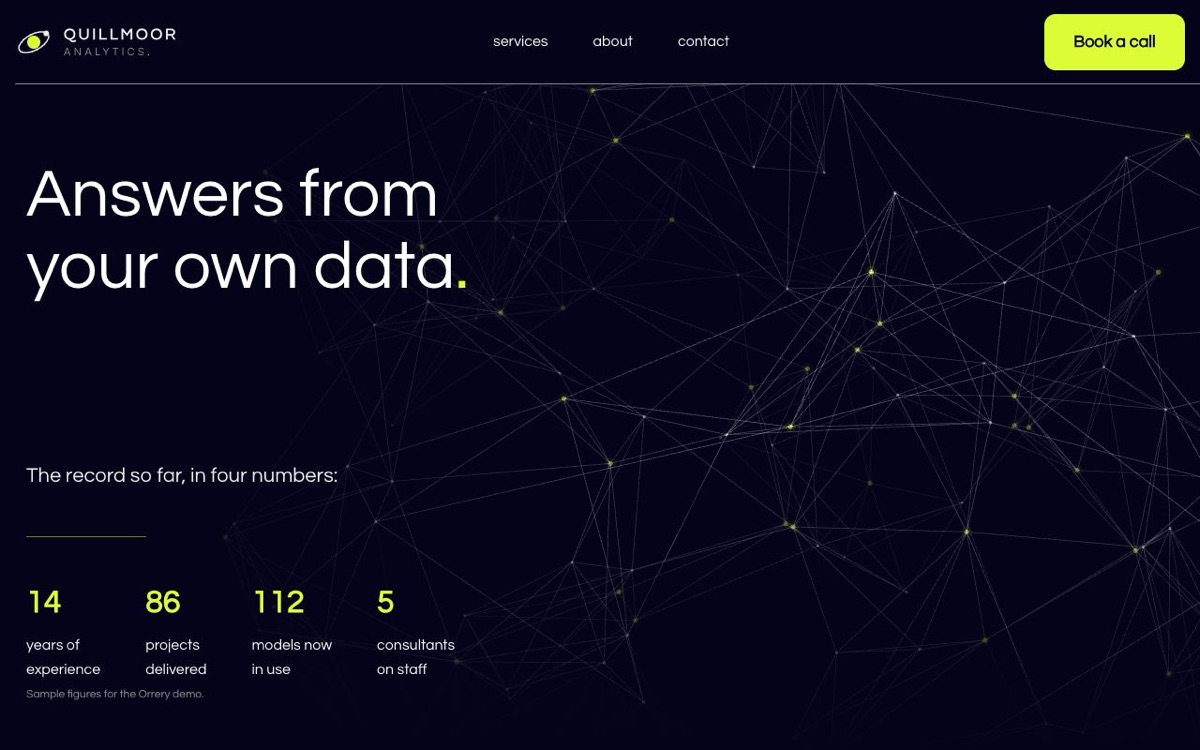
If you sell services rather than shipped products (audits, migrations, support contracts), Orrery's service cards and process steps fit better than a project gallery. It has home, services, about and contact pages, an HTML download and the Astro source. The demo firm does data analytics, which is already close to what many IT consultancies sell. More on the Orrery page.
What an IT company's site needs
- Work a buyer can look at. Screenshots, a link to a live product, the stack you used. Lattice's project switcher puts the desktop and phone views side by side.
- Your stack in plain words. Buyers often search for a technology, such as Laravel, React Native or AWS. Name the ones you really use in the project and service text rather than in a wall of logos.
- How you work and how you bill. Fixed price, time and materials or a monthly retainer. You don't have to publish rates to explain the model.
- Where the team is and which hours overlap with the client's. For a buyer in another country this matters as much as skills.
- A page that loads fast. Lattice keeps its styles and scripts inside the HTML file; the only outside files are Google Fonts.
What Formgong adds to the template
- A form that says thanks only when it should. Every form here posts to Formgong and shows success only when the server answers
success: true; anything else shows an error. In our test of 105 forms on AI-built sites, 27 showed "Message sent" and sent nothing (the study). - Messages where you will see them. Each submission is emailed to you as it arrives, on the free plan too, with Telegram alerts if you want them. From there it can go on to Slack, Google Sheets, Notion, Zapier or n8n.
- An AI help chat. One script tag adds a chat that answers visitors from your own pages and passes the conversation to you when it can't (how it works).
- Reviews. Collect star reviews through Formgong, approve them, and show them on the site with the review widget.
- MIT license. The HTML templates are MIT-licensed: use them for yourself or for clients, change anything, drop the footer credit.
How to download and publish it
- Create a free form at formgong.com/new and copy its access key. It starts with fk_ and is public by design.
- Download the template's zip. In every .html file, replace fk_your_access_key with your key; in Orrery, also replace https://example.com with your site address.
- Upload the folder to a static host such as Cloudflare Pages, Netlify or GitHub Pages.
- Send one test message from the live site and check that it arrives.
Tell us what's missing
We add templates one kind of business at a time. If yours isn't covered, or one of these gets something wrong about how your work is bought, write to support@formgong.com and tell us what you'd change. We pick the next templates from what people ask for there.
Questions
Can I use these templates for a client?
Yes. Under the MIT license you can build client sites with them and change whatever you like. Keep the license file in the project.
Can I add Cloudflare Turnstile against spam?
Yes. Put your site key in the data-sitekey attribute of the form and turn Turnstile on for that form in Formgong.
Can the contact form send leads to our CRM?
Formgong emails each submission and can pass it on through a webhook, Zapier or n8n, so a CRM that accepts any of those can take it from there.
Is there a template for a SaaS product?
Not yet. Both of these are company sites, not product landing pages with plans and sign-up buttons.
Sources
Checked on 16.10.2026 against these public pages: Lattice on GitHub, Orrery on GitHub, MIT License (Open Source Initiative).