Form backends
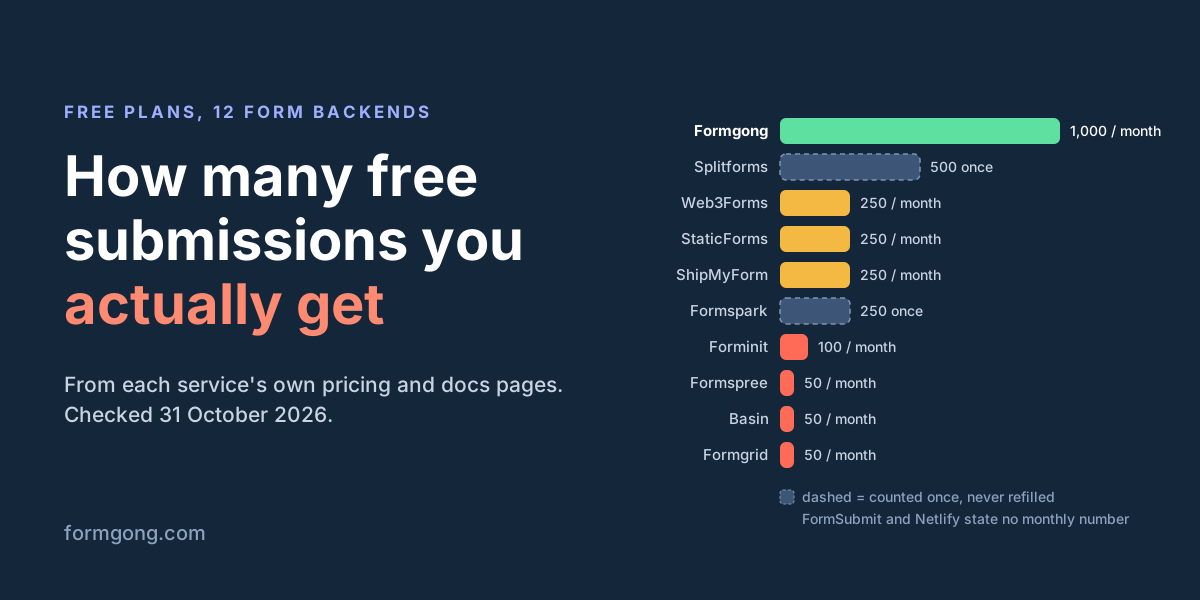
Which free form backend gives you the most submissions?
Most free form plans stop at 50 or 250 submissions, and some never refill. We read the pricing and docs pages of 12 services and measured what their captchas add to a page.
The Formgong blog
Connect your forms, receive notifications, and make sure submissions actually reach you.
Form backends
Most free form plans stop at 50 or 250 submissions, and some never refill. We read the pricing and docs pages of 12 services and measured what their captchas add to a page.
AI chatbots
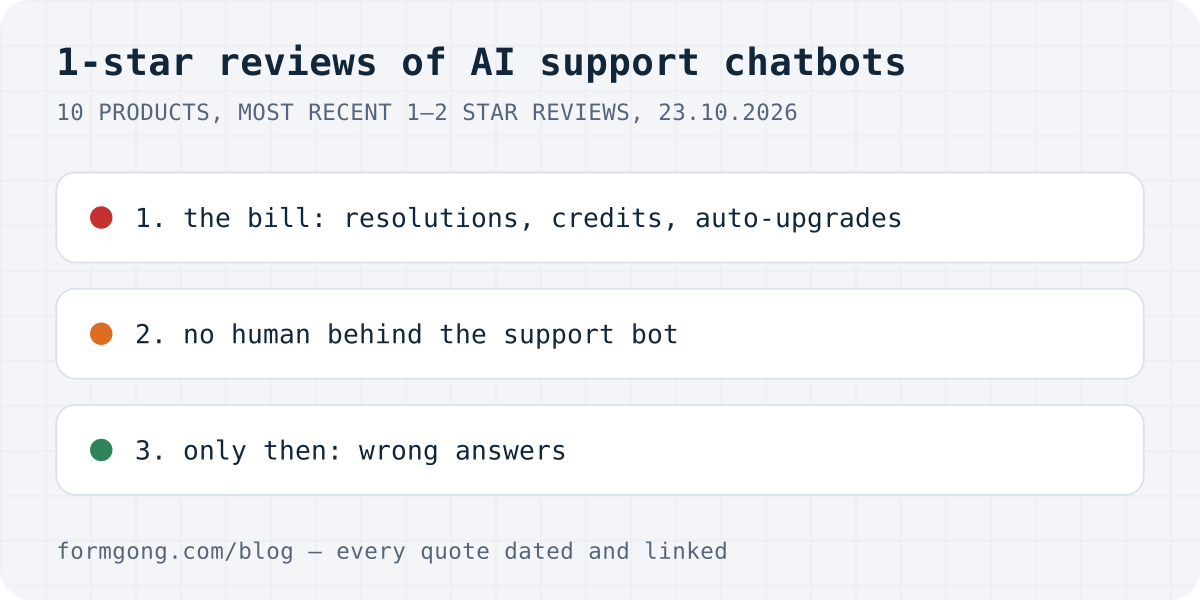
Before deciding what to build next for our help chat, we read the most recent one- and two-star reviews of ten competing AI support chatbots. We expected anger about wrong answers. The loudest and most repeated complaint turned out to be the bill.
Voice forms
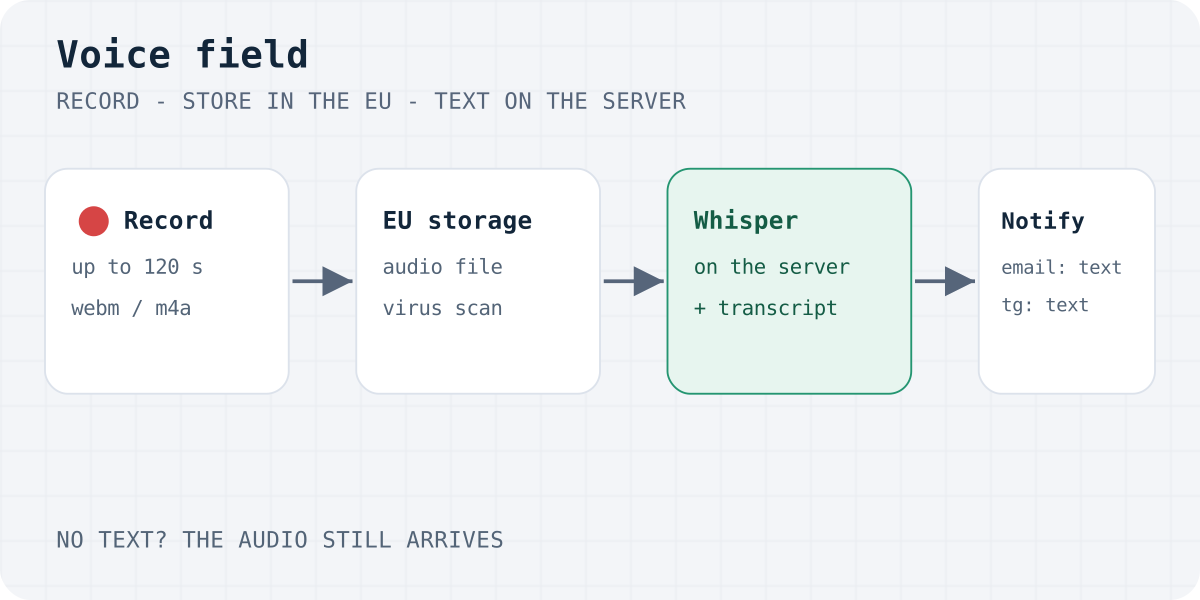
A record button inside your own form. You get the audio, a transcript made on our server after the form is sent, and the audio even when the text fails.
Contact Form 7
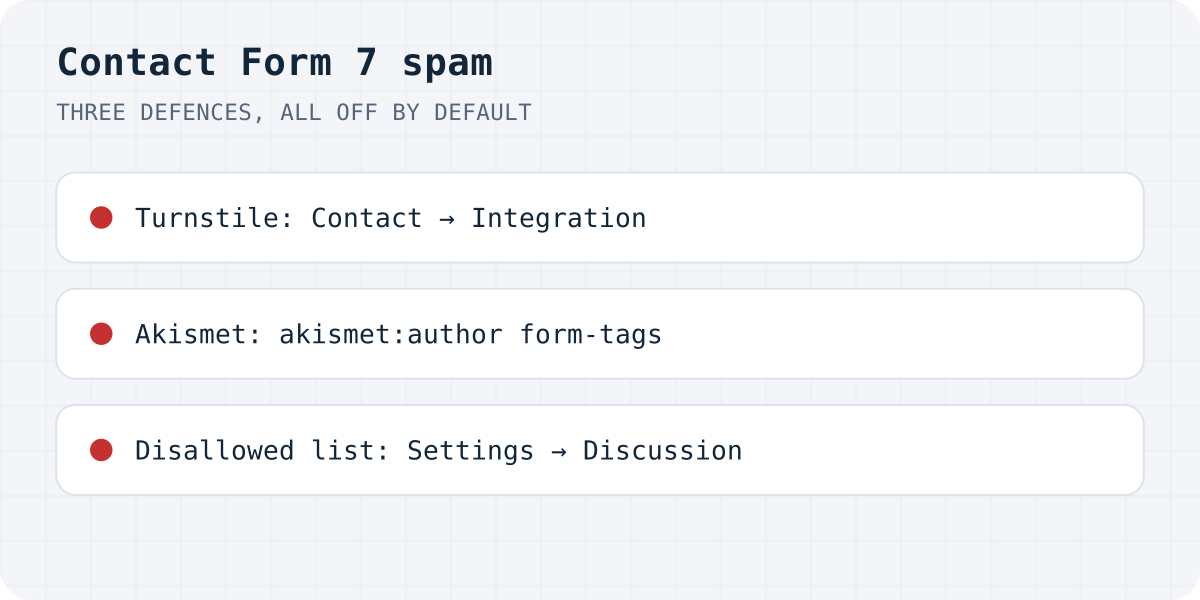
Contact Form 7 has no spam protection switched on out of the box, so a new form gets bot submissions within days. The plugin ships three defences and recommends one of them itself. Here is how to turn them on, and how to tell when they start eating real messages.
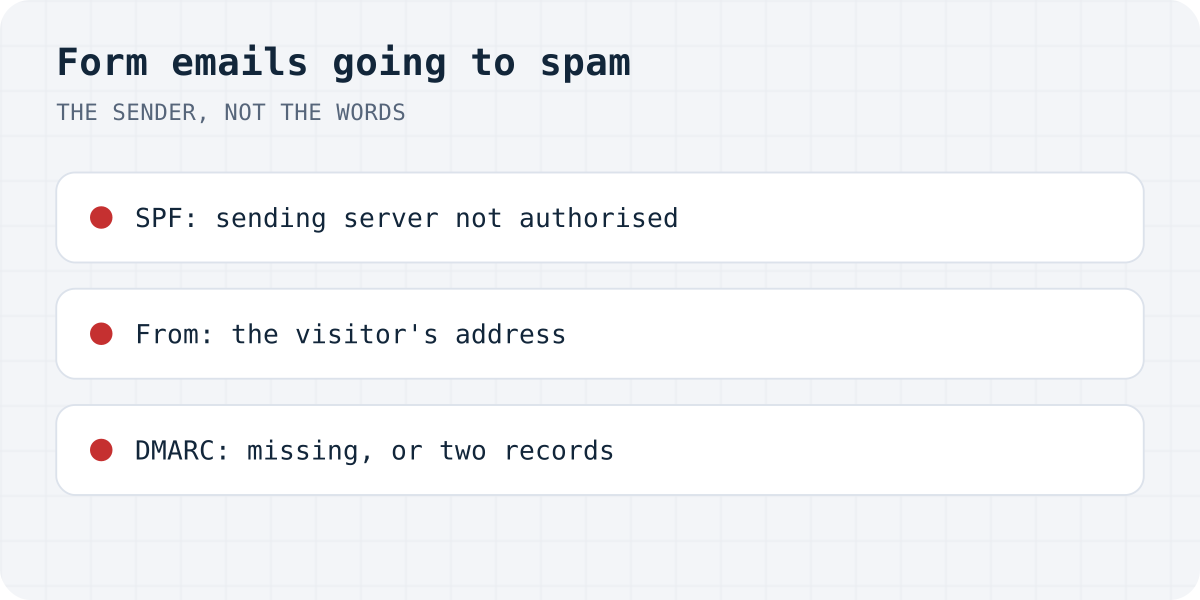
Deliverability
When every form notification lands in the spam folder, the message text is rarely the reason. Mail providers judge the sender: which server sent it, whether the domain allows that, and whether the From address lines up. Four checks cover it.
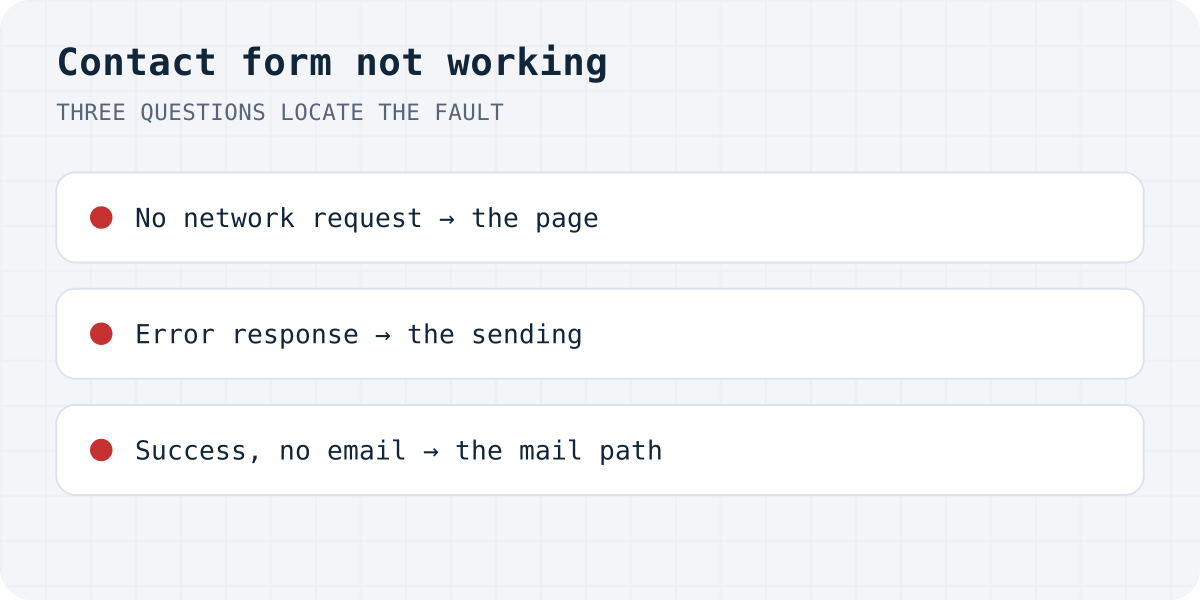
Contact forms
“The contact form doesn't work” names a symptom, not a fault. The fault is in one of three places: the page (nothing sends), the sending (an error comes back), or the inbox (sent, never seen). Three questions tell you which, and each answer has its own guide.
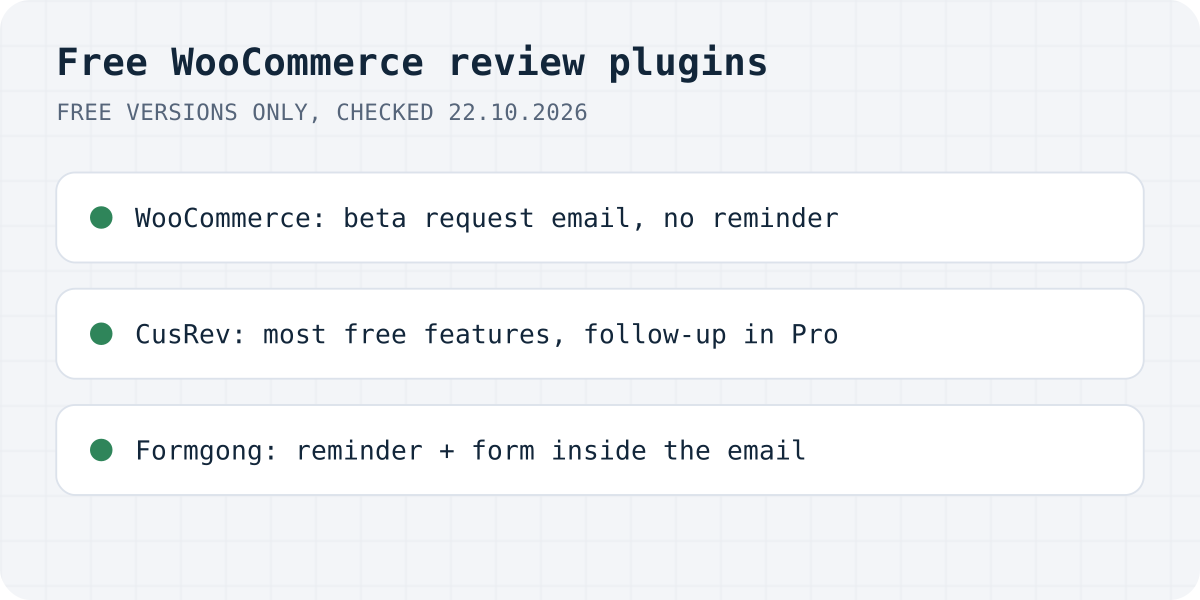
WooCommerce
Most comparisons list everything a plugin can do and leave out which half needs a licence. This one only counts what the free version includes, checked on each plugin's own pages.
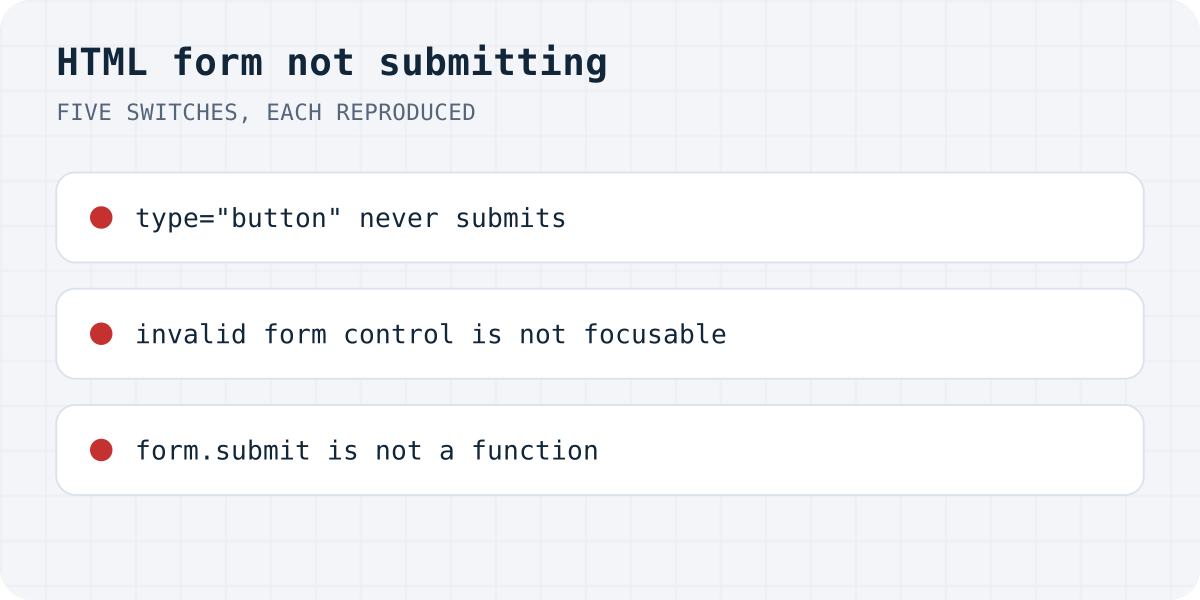
HTML forms
We built a test page with one broken switch per form and clicked through it: a button that is not a submit button, a hidden required field, an input named submit, a disabled button and a handler that swallows the event. Here is what each one looks like, and the console line that gives it away.
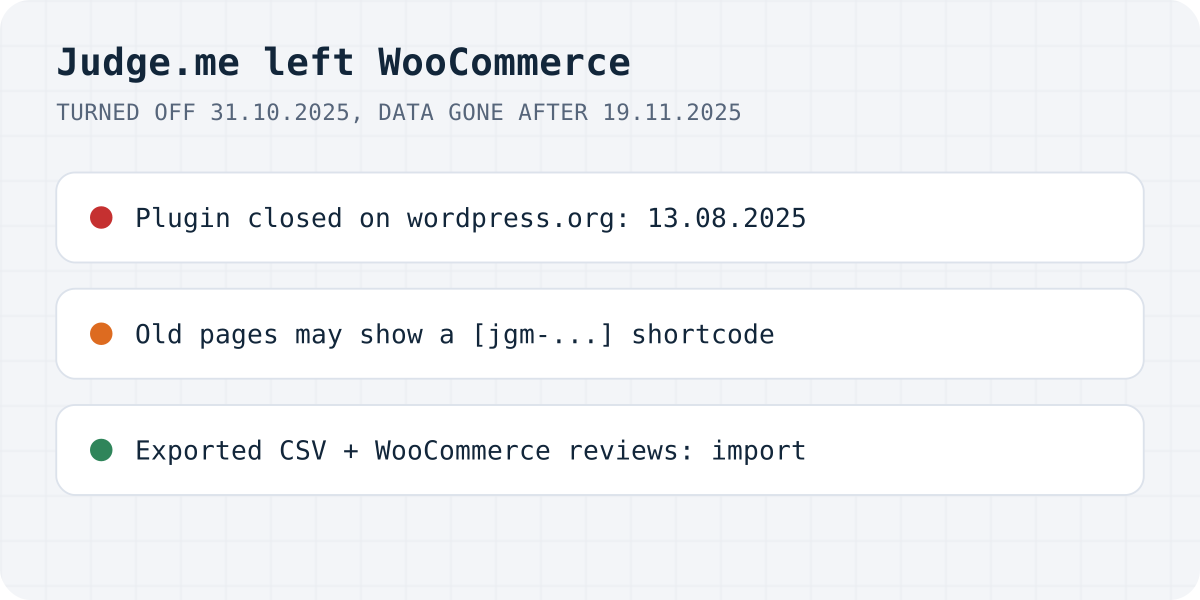
Judge.me
If your product pages show a stray [jgm-…] shortcode or no reviews at all, this is why. What Judge.me shut down and when, what you can still recover, and how to bring the reviews back.
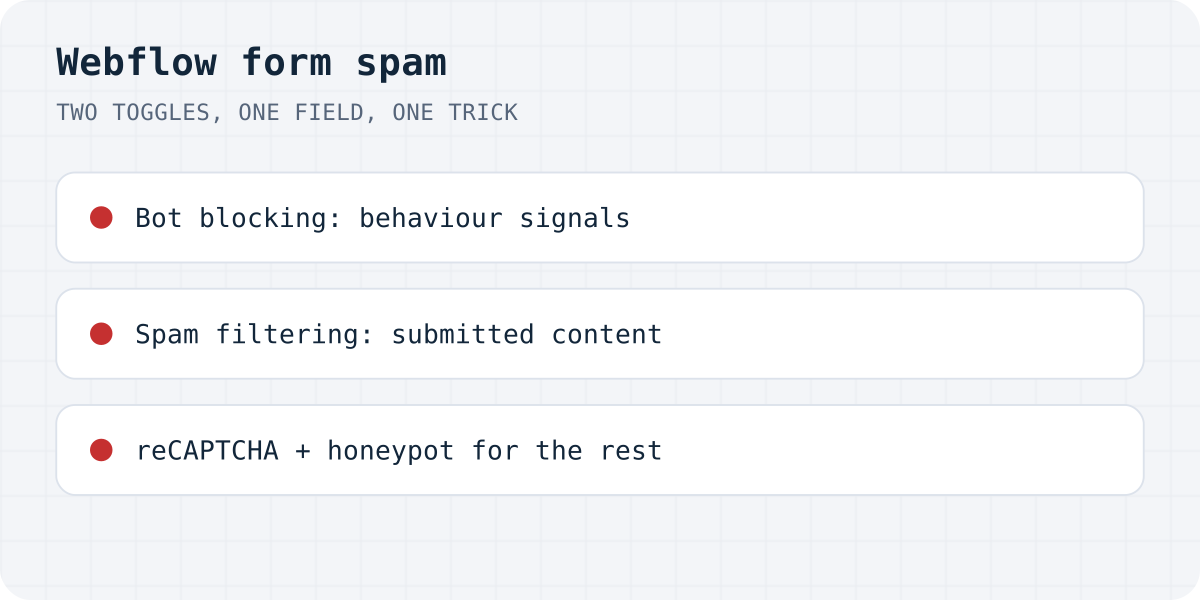
Webflow
Webflow's help centre names four defences against form spam: bot blocking, spam filtering, the reCAPTCHA field and the honeypot technique. Two of them are one switch each. Here is what each one does, the caveats Webflow documents, and what to do when spam keeps coming.
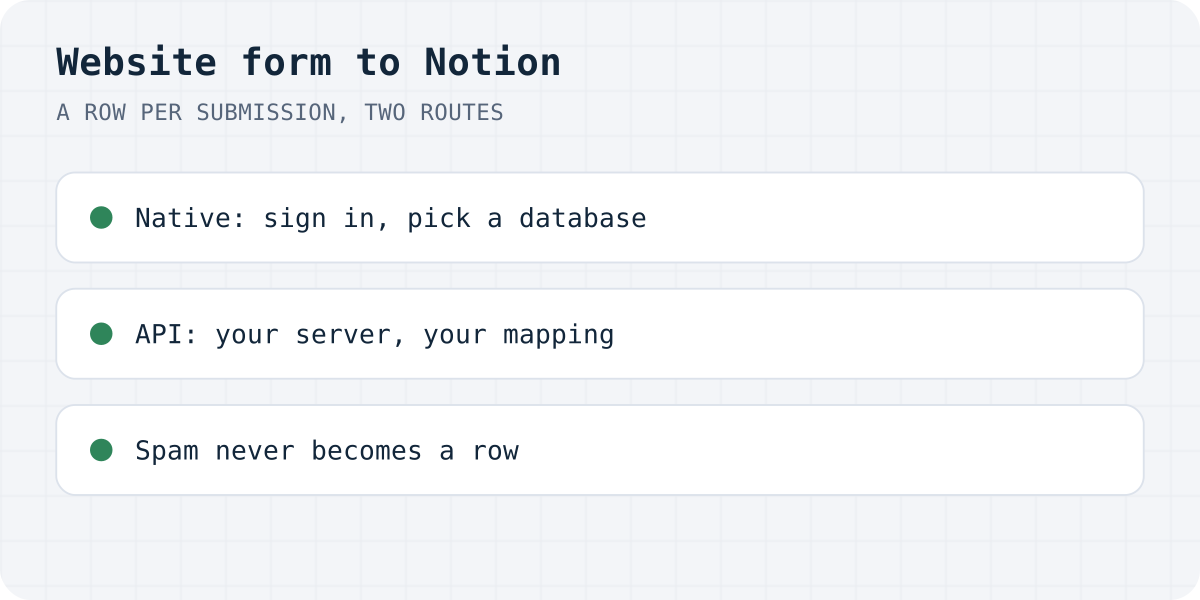
Notion
A contact form that writes each submission into a Notion database turns Notion into a working inbox: assign owners, add statuses, filter by page. There are two honest routes, a form backend with a native Notion connection, and the Notion API with your own code. Here is both, with the traps of each.
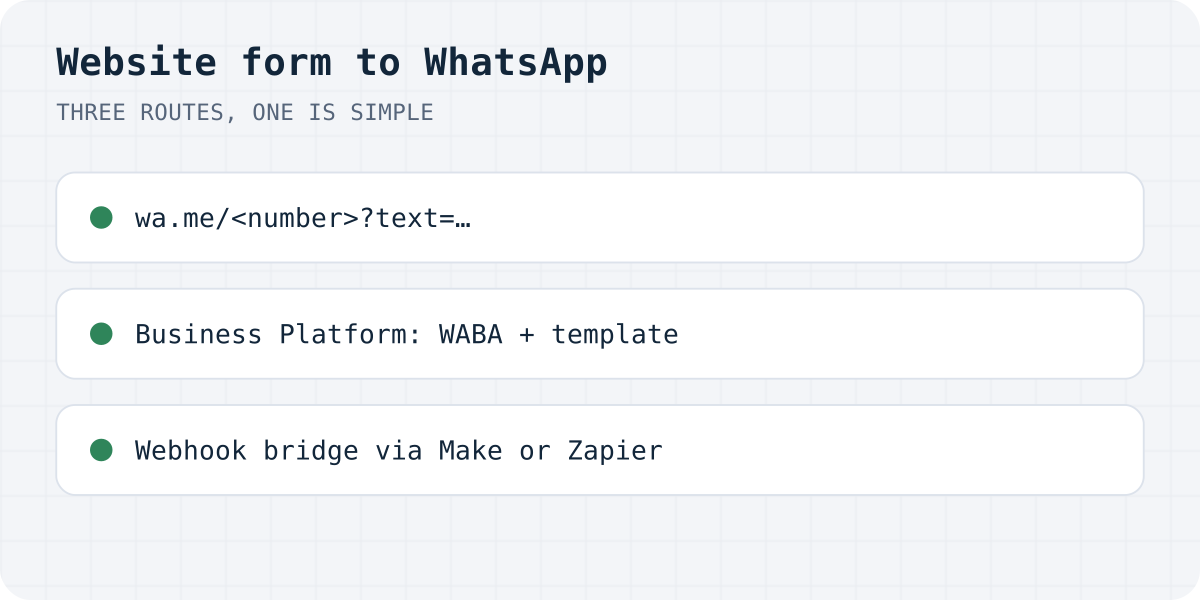
“Form to WhatsApp” hides three different wishes: let visitors message you on WhatsApp, get a WhatsApp ping when the form is submitted, or both. Only the first is simple. Here is each route with its true requirements, from WhatsApp's and Meta's own pages, and the alternative most people actually ship.
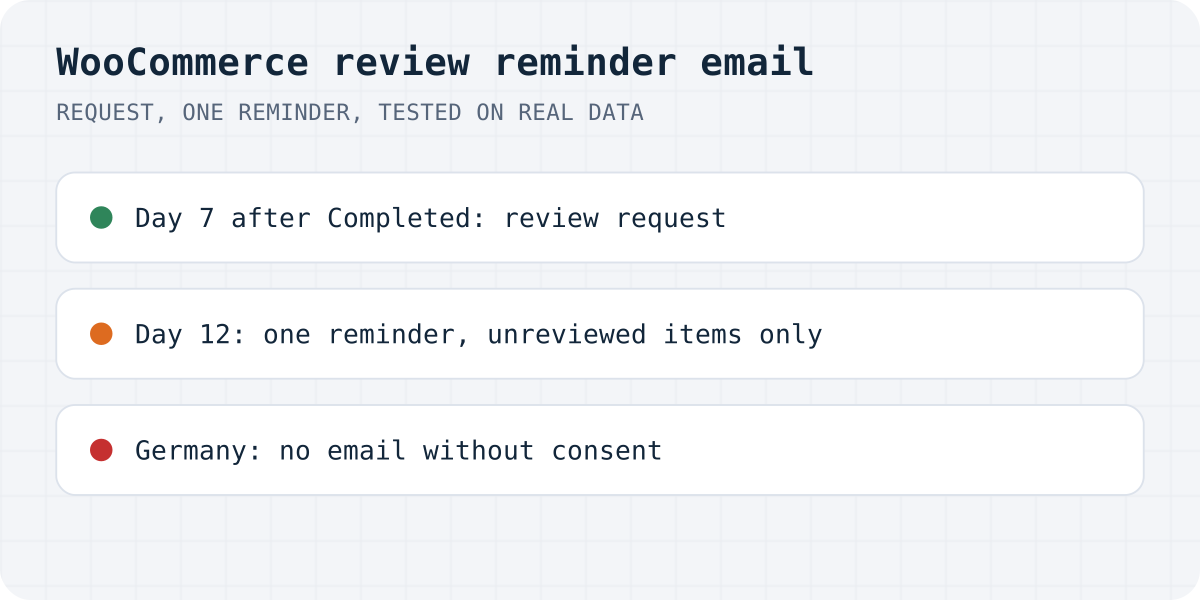
WooCommerce
Most buyers never come back to leave a review unless you ask. Here is how to ask after every WooCommerce order, follow up once, and test the email on real data before it goes out.
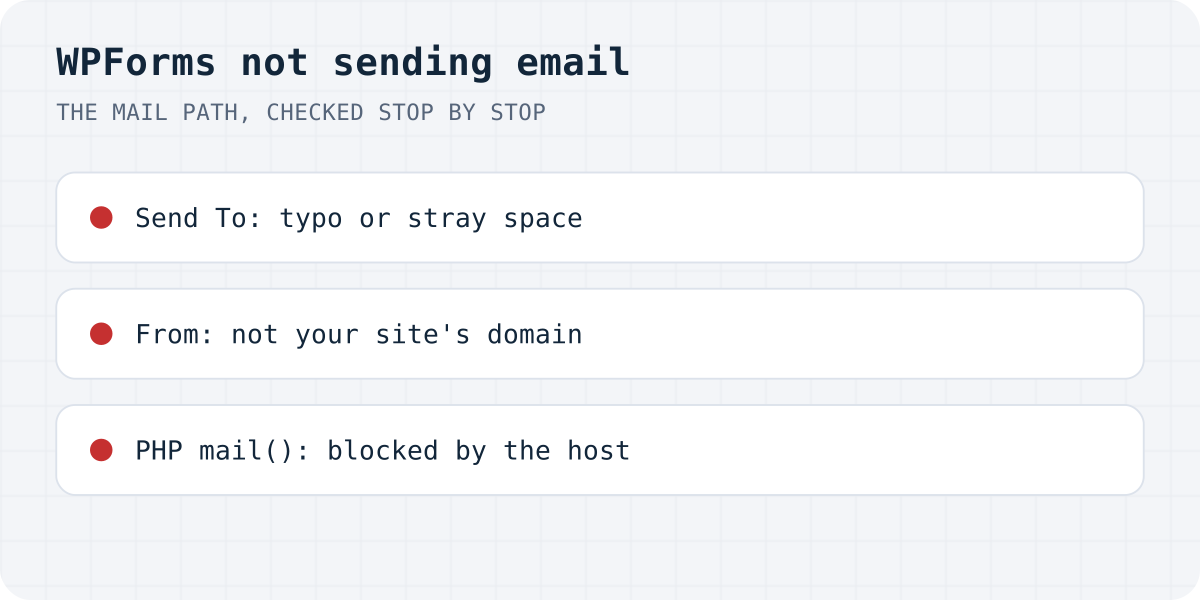
WPForms
When a WPForms form submits fine and the notification never lands, the form is rarely the problem: the email died somewhere between WordPress and your inbox. The mail path has four stops, and each one has its own check.
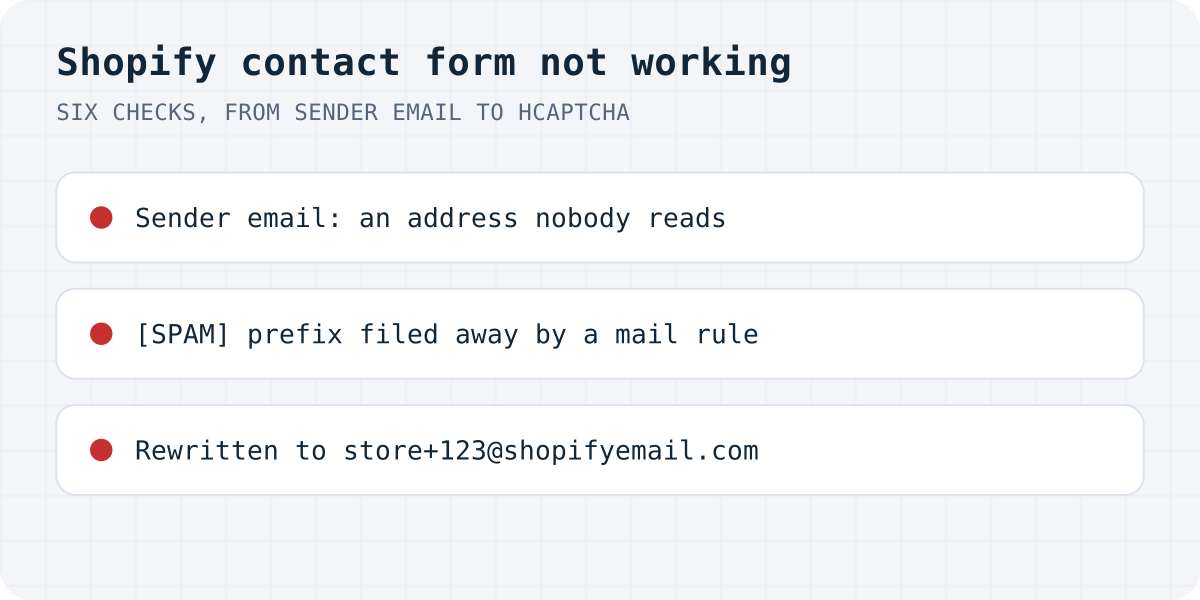
Shopify
Most “broken” Shopify contact forms work fine: the email goes to an address nobody reads, or sits behind a [SPAM] filter. The checks in this guide go from the most likely cause to the rarest, with the exact settings pages for each.
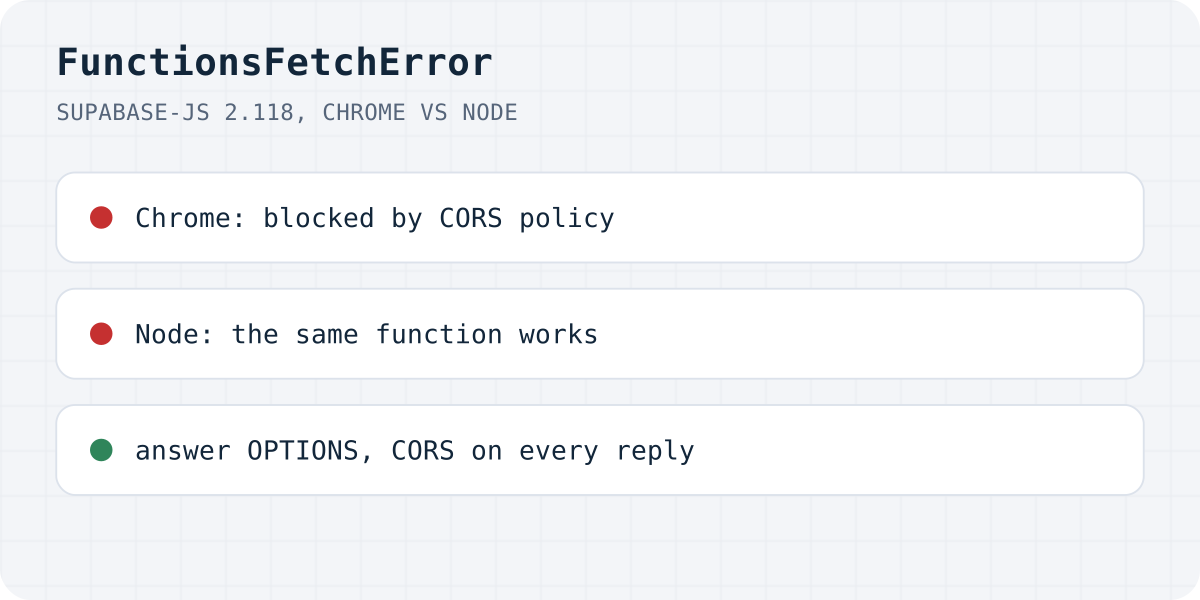
Supabase
We called Edge Functions with supabase-js from Node and from Chrome and broke them on purpose. In Node, five of seven calls either worked or returned the function's own error. In Chrome, six of seven ended in this one sentence, and the console line above it said which case it was.
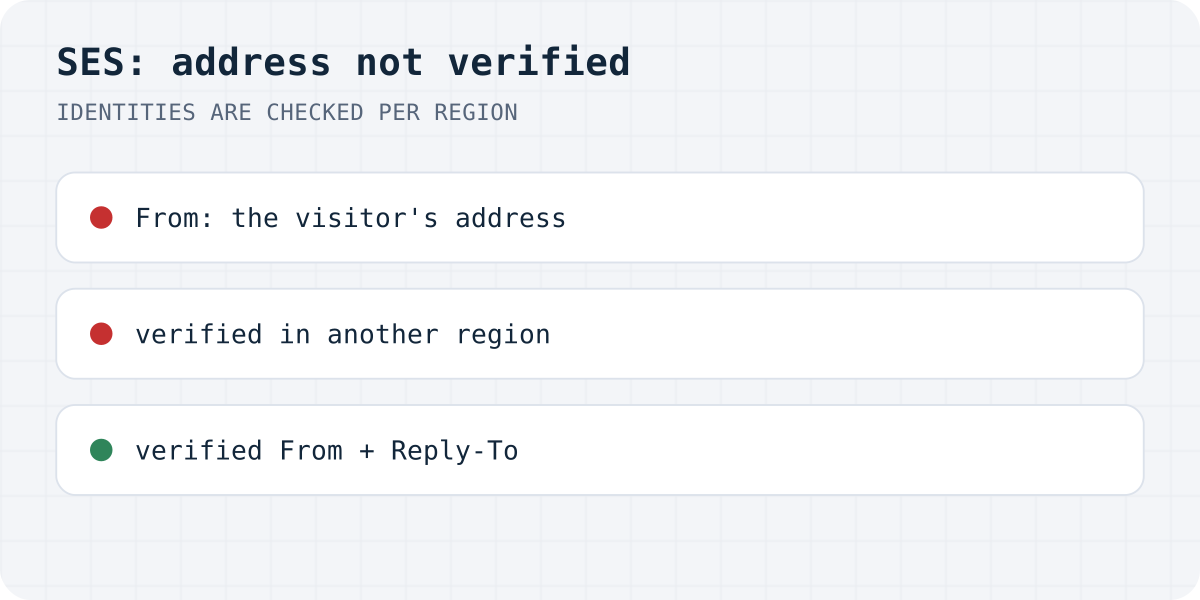
Amazon SES
This one needs a real AWS account, so we could not trigger it with fake keys; we quote AWS's documentation for the exact wording. We did check what SES says before it gets that far, which tells you whether your credentials are the problem.
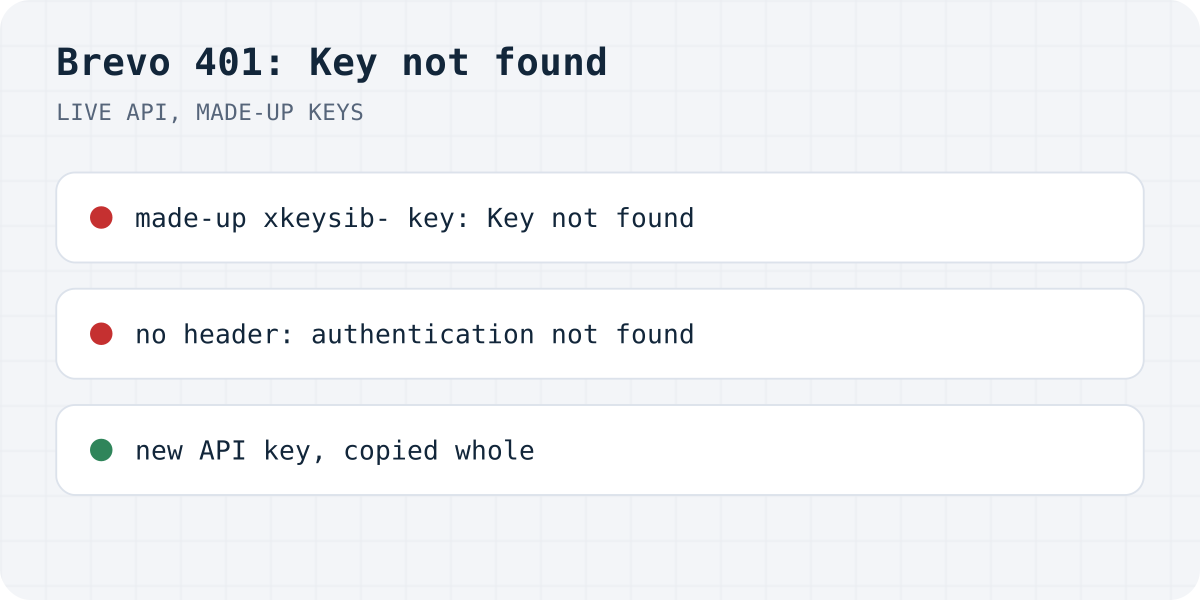
Brevo
We called Brevo's email API and SMTP relay with made-up keys. A wrong key, an SMTP key, a cut-short key and the word “undefined” all got “Key not found”. A missing header and a Bearer token got two other messages.
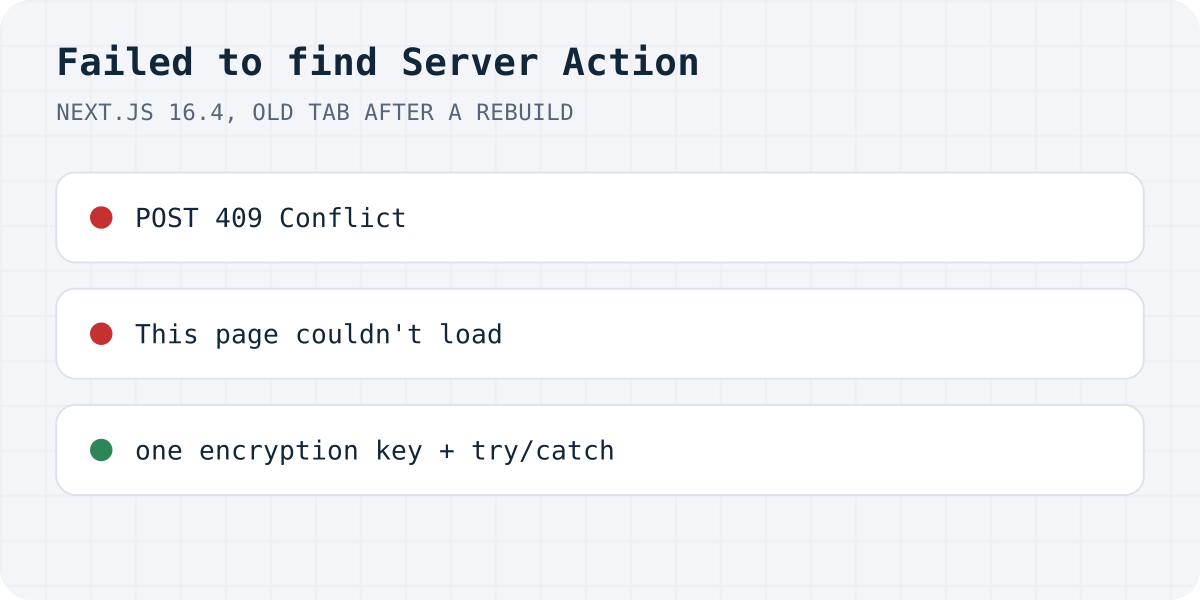
Next.js
We opened a form, rebuilt the Next.js app, and pressed Send in the old tab. The server logged “Failed to find Server Action”, the browser got a 409, and the visitor saw “This page couldn’t load” with their message gone.
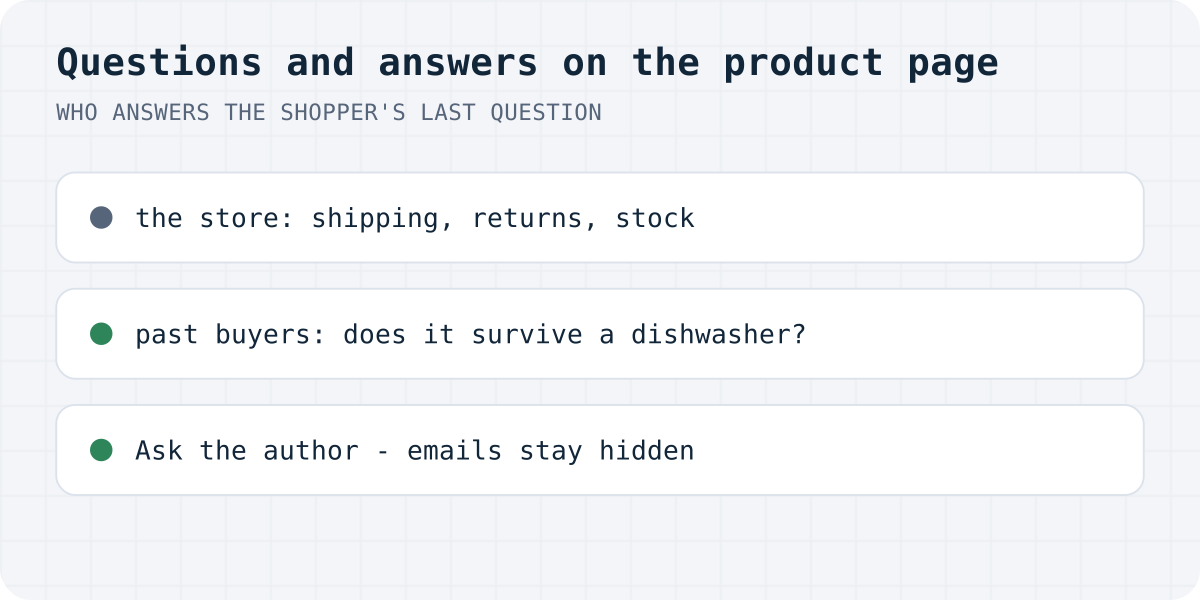
Reviews
A Q&A section catches the one question that stops a purchase. The interesting choice is who answers: the store, or a past buyer who wrote a review.
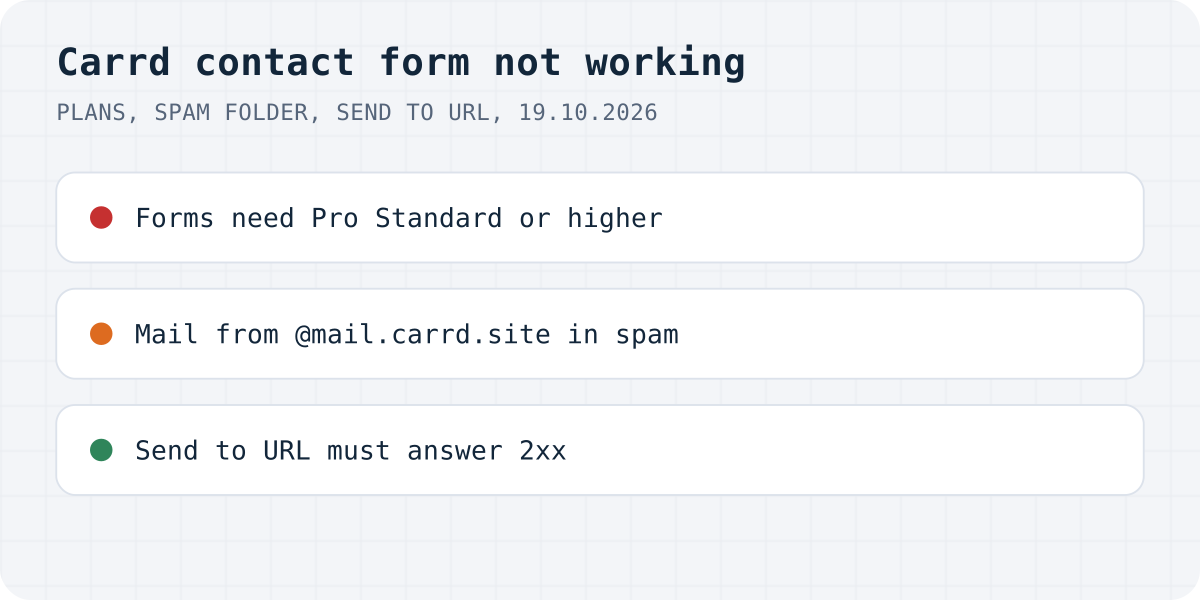
Carrd forms
Most Carrd form problems come from three places: the plan the site is on, the mailbox that receives the messages, and the reply a custom URL sends back. We read Carrd's documentation and put the causes in the order worth checking.
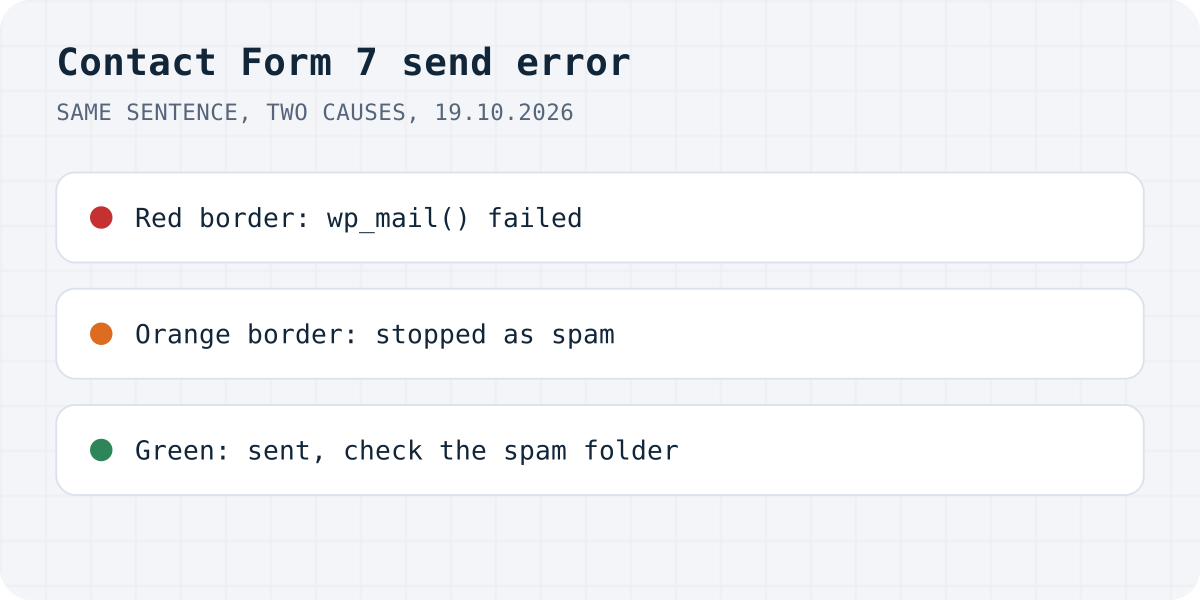
Contact Form 7
We installed Contact Form 7 on a test WordPress and made it fail on purpose. The same sentence came back for a broken mail setup and for a message the spam filter stopped. Here is how to tell which one you have, and what fixes each.
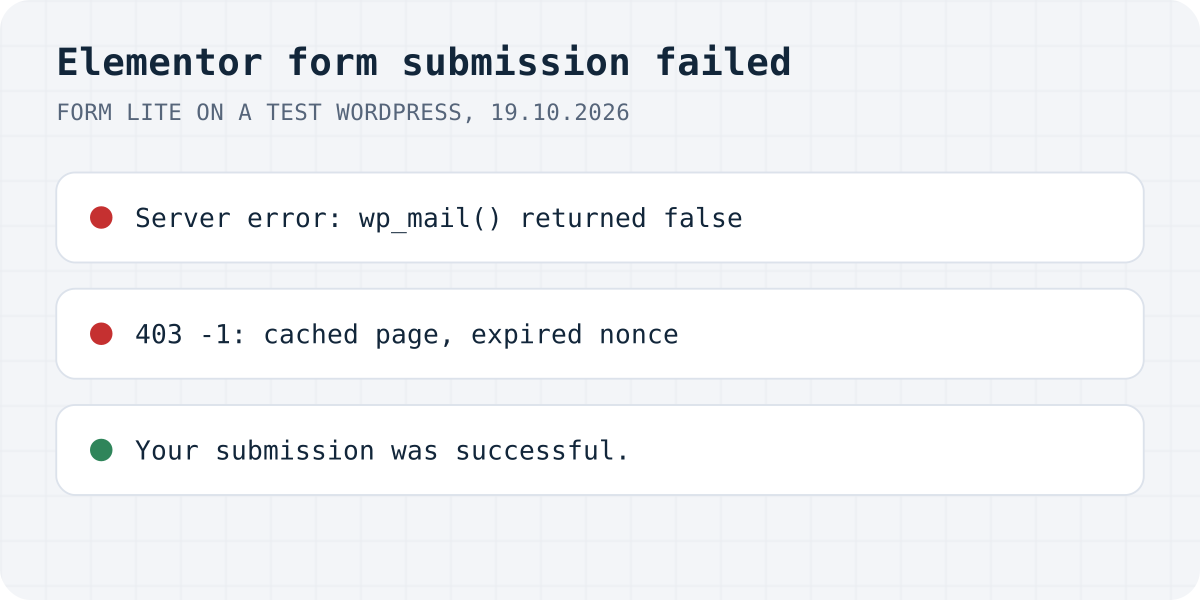
Elementor forms
We set up Elementor's free Form Lite widget on a test WordPress and broke it in three ways. Each one ended with a red message, and only one of them was really about email. Here is what each message means and where to look.
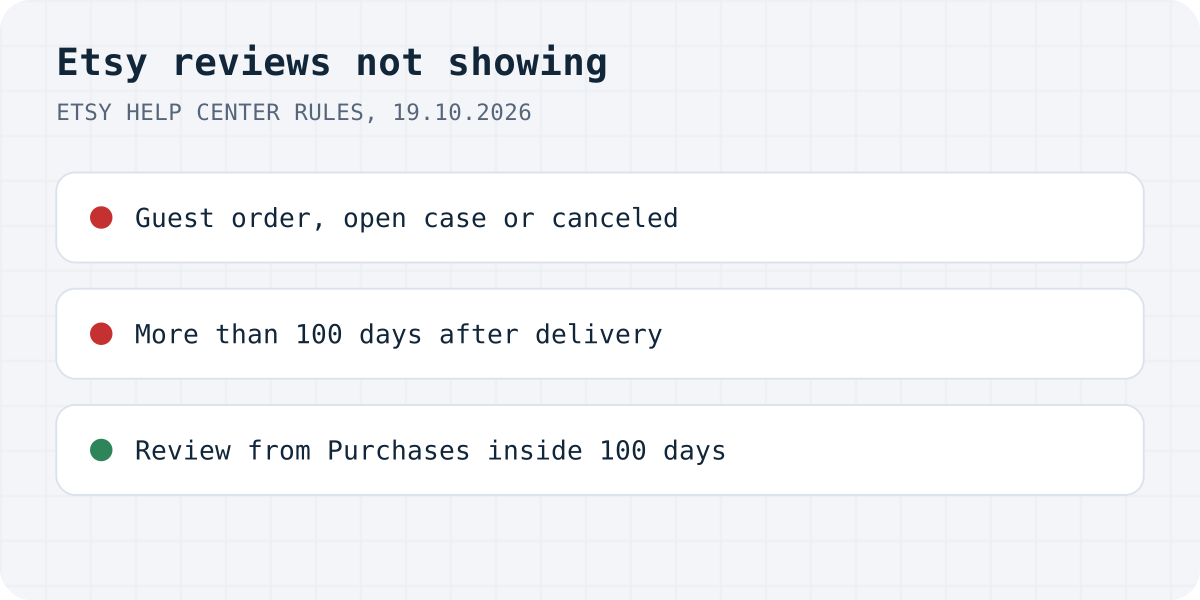
Etsy
Etsy decides when a review can be written, who can see it and when it comes down. We went through Etsy's Help Center for both sides of the order and collected the rules that make a review seem to go missing.